Industry Insights
Best Practices for Pet-Friendly Short-Term Rentals: A Host's Guide


Updated on:
October 15, 2026


For many travelers, a pet is part of the family, and the trip does not happen without it. On Airbnb, those guests add their pets right in the search, next to adults and children, and a listing that says no pets does not show up for them. That is the upside of welcoming pets. The cost is extra cleaning, more wear on the home and a few rules about fees and service animals that you have to follow.
Pet-friendly features also pair well with essential amenities and can help a rental stand out in a crowded market. This guide covers the decisions that matter: whether your home suits pets, how to write a pet policy, how pet fees work, what the rules are for service animals, and how to prepare, manage and market a pet-friendly rental.
Guests traveling with pets search for homes that allow them, and both Airbnb and Vrbo build that into their search tools. The two platform facts below show how much weight that carries.
Many pet owners look for short-term rentals that let them travel with their furry companions without hassle, and not every owner is willing to host them. By catering to this group, you open your listing to guests who search specifically for homes that allow pets. Vrbo says pets are one of its top 10 most popular search filters worldwide, a sign of how many travelers start their search with a pet in mind.
Demand has grown too. Airbnb reported that searches for trips with pets rose 30% for spring 2025 compared with the previous spring and by more than 40% among solo travelers.
Airbnb leaves the decision to each host, so start with the home, not with the demand. Pets are easier to host in some houses than in others, and the extra income only helps if the home can handle the extra wear.
A home usually works well for pets when it has hard flooring such as tile or luxury vinyl plank instead of carpet, a fenced yard, furniture that can be washed or covered, and a cleaning team that already plans extra time for pet stays. Homes near trails, lakes and beaches tend to suit guests who travel with dogs.
A no-pets policy is a legitimate choice. Delicate wood floors, rugs that are hard to clean, shared walls with neighbors, an HOA or lease that restricts animals, or a cleaning setup that cannot handle hair and odors are all good reasons. Some guests also look for homes that have never had pets because of allergies, so a pet-free listing can be a selling point of its own. If you stay pet-free, say so plainly in your house rules.

Airbnb says guests are required to follow the host's rules around pets and that a host may, for example, not allow pets on furniture. Your policy only works if it is specific. Make sure it covers these points.
Spell out your limits, including how many pets are allowed per booking and which kinds. Airbnb's pet guidelines apply to domesticated pets typically found in homes, such as dogs and housecats. If you set size or other limits, because of damage or noise concerns, state them plainly in the listing.
State the fee clearly. Guests should know exactly what they are paying and why. The section below explains how Airbnb's pet fee works.
Tell guests that pets stay leashed in shared spaces, waste gets picked up and noise stays under control. Add where pets cannot go, such as beds, furniture or certain rooms, and whether pets can be left alone in the home.
You can adapt this pet policy template for your listing and house rules:
Pets are welcome with advance notice. Please tell us what kind of pet you are bringing and how many. We allow up to 2 pets per booking. Pets stay off beds and furniture. Please do not leave pets alone in the home. Keep dogs on a leash outside the fenced yard and pick up waste right away, using the bags we provide. Excessive barking counts as a noise violation. A pet fee applies and is shown at checkout. Service animals are always welcome and are not subject to the pet fee.
Set your own numbers and rules, and put them in your short-term rental’s house rules, where guests have to agree to them before they book.
Airbnb has a built-in pet fee for home listings. Guests tell Airbnb how many pets they are bringing, from 0 to 5, and you can review that. If you charge a pet fee, it shows both in the nightly rate and in the total price at checkout. Because it is built into the nightly rate, guests do not see it as its own line, so mention it in your description and house rules. Airbnb says pet fees should only cover the expected cleaning, such as extra hair and paw prints, not damage.
You can also charge one flat fee that covers multiple pets, and the pet fee cannot be more than your nightly base rate. You add it as an additional fee in your listing's pricing settings. If your listing said "No pets allowed" before, adding a pet fee switches it to "Pets allowed". The current steps are in Airbnb's pet fee guide.
Airbnb does not set an amount, and it is up to you. A good starting point is what a pet turnover actually costs you in extra cleaning time, checked against what similar pet-friendly listings in your market charge. A fee that is too high can push guests toward other listings.
Test your own listing the way a guest does. Search the same dates once with no pets and once with one pet, and the difference in the total is your pet fee as the guest sees it. Try a different stay length too, to see whether the fee is charged per booking or per night.
A pet fee is part of what you charge the guest, so the platform fee applies to it. Airbnb's host-only fee is a percentage of the nightly price and of any fees you charge, so on a $150 pet fee at 15.5% you keep $126.75. To end up with the full $150, the fee would have to be about $177.51, because 150 divided by 0.845 is about 177.51, and Airbnb caps the pet fee at your nightly base rate. These are examples, not figures for any listing. Airbnb's service fee guide has the percentages.
Vrbo works the same way: its commission applies to the rental amount and to fees you charge, including cleaning, pet and boat fees.
On Vrbo, you set your pet policy in the house rules. Choose Pets allowed, then add the pet type, size and number you accept. You can add up to three custom rules, and if you connect through property management software, update the rules there. The steps are in Vrbo's house rules guide.

Make sure your pet policy is clear on all booking platforms and in your rental agreement, and repeat it in your house rules, listing description and pre-arrival message. Airbnb encourages guests to contact the host about which pets they plan to bring, so reply quickly and use the same wording each time. Guests who read the rules before booking arrive knowing them, which means fewer arguments about furniture, fees and noise.
Service animals follow different rules from pets, and hosts get this wrong more often than anything else in this guide. Airbnb says hosts must be ready to host service animals, which are not pets. Guests can generally bring a service animal even where your rules prohibit pets, and you cannot charge a pet fee or a cleaning fee for animal hair or dander because of a service animal. Airbnb's pet fee tool says the same: service animals always stay for free. If a service animal damages your property, you can still request payment through AirCover in the Resolution Center. Airbnb keeps them separate even in search: under the pets counter in the guest selector there is a "Bringing a service animal?" link. The details are in Airbnb's accessibility guidance.
Emotional support animals (ESAs) are not the same as service animals. Airbnb requires hosts to accept them, without extra fees, for home reservations in California and New York. Elsewhere in the U.S., you may charge your normal pet fee and additional cleaning fees for pet hair, or decline the reservation if you do not accept pets.
Vrbo takes a similar line. Hosts with properties in countries that have service animal laws must accommodate guests who need a service animal, regardless of the property's normal pet policy. You may ask whether the animal is a service animal and what tasks it performs, and you cannot charge a pet fee or raise the security deposit for it. You can still charge for damage beyond reasonable use caused by the handler and the animal. Emotional support animals are not covered by Vrbo's service animal policy, so check your local laws and talk with the guest. The full rules are in Vrbo's service animal policy.
The table below sums up what you can require or charge for each, based on Airbnb’s Accessibility Policy and Vrbo’s service animal policy.
In practice, write your pet policy so it covers pets only, and add one line that service animals are always welcome. This is general information and not legal advice, so check your local laws if you are unsure.
A few things in place before the first pet arrives make stays smoother for guests and for your cleaning team. Start with the supplies, then the cleaning kit, and then the house itself.
Before welcoming pets, run through a comprehensive amenities checklist so you do not overlook anything. Most guests bring their own pet gear, but backups help. Airbnb's host guidance suggests bowls for food and water, pet-friendly furniture covers, designated towels to wipe paws at the door, a scratching post and litter box (the cardboard kind will do) and extra cleaning supplies. Here is what we keep ready.
One set inside, one outside if possible. Guests appreciate not having to pack their own.
Mount a dispenser outside. It is a simple thing that makes a big difference.
Label a few older towels and leave them near the entrance. Most guests will use them.
Keep a pack near the door so guests can wipe paws before coming inside.
A small gesture with a big effect, and a welcoming touch.
Handy for anyone bringing wet food. Not essential, but appreciated.
The pet fee is meant to pay for the extra cleaning, so plan it. Give your team more time for pet turnovers, and factor that extra time into your vacation rental cleaning costs.
Make sure there is a decent one on site. Pet owners often want to clean up after themselves.
For fur, muddy spots and general messes. Leave them somewhere obvious.
Nature's Miracle or something similar. This one is non-negotiable.
Use them on couches, rugs and mattresses. They will save you a lot of time and money.
Make it clear that cleaning up pet waste is expected, indoors and out. Some hosts have stopped allowing pets over this, especially in winter when frozen waste builds up in yards, so spell it out in your house rules.
Secure fencing is a major bonus. Guests feel more comfortable when their pets can roam without escaping. Protect beds with extra covers too, because even if pets are not allowed on furniture, you should assume it will happen.
For dogs, a short list of nearby parks and trails helps guests who do not know the area. For cats, say clearly that cats are allowed, because many pet-friendly listings only mention dogs. A scratching post protects your furniture, and a litter box with a scoop makes the stay easier, although guests can bring their own litter.
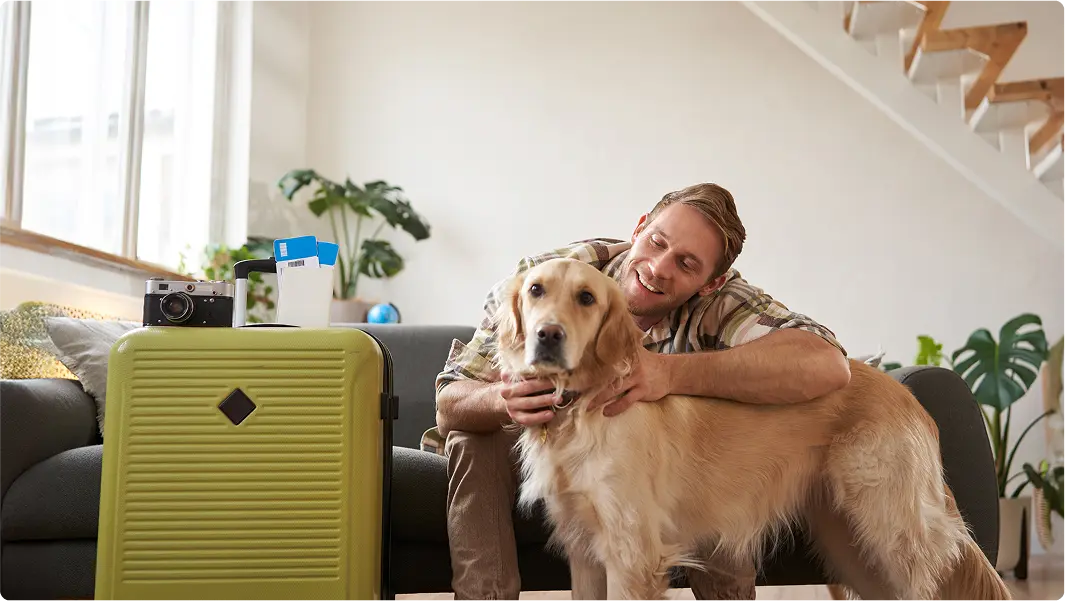
Even in a well-prepared home, the same few problems come up again and again: noise, pets that were not reported, damage and allergies. Handle them quickly.
If neighbors or other guests report excessive noise, contact the guest right away. Most pet owners are understanding and will take steps to calm their pets.
Airbnb says Host Damage Protection, part of AirCover for Hosts, covers unexpected pet costs such as scratched upholstery or stains. To use it, document the damage with photos and request reimbursement through Airbnb’s Resolution Center. Know the AirCover limits before you rely on it.
AirCover only applies to Airbnb bookings. Stays booked on Vrbo, Booking.com or directly sit outside it, so pet damage there depends on your own insurance and any damage protection you add. Clear records also protect you from exaggerated damage claims and disputes with guests.
If a guest arrives with a pet that was not on the booking, deal with it right away. We contact the guest, confirm the pet and collect the pet fee separately, so the fee does not get lost.
Be mindful of guests with allergies when you schedule back-to-back bookings. Airbnb says hosts should tell guests if pets live at the property, which helps guests with allergies or phobias set expectations. If you allow guest pets, you cannot promise the next guest that no animal has ever stayed, so consider pet-free zones or a deep clean between stays.
Allowing pets only pays off if pet owners can find your listing and trust what it says. Set your pet policy, say what you actually offer and show it in your photos.
On Airbnb, guests add pets in the same guest selector where they enter adults and children, up to 5 pets. When they do, Airbnb turns on the Allows pets filter, which also sits under Booking options in the Filters, and the results show only homes that allow pets. If your listing says no pets, it does not appear in those searches, so your pet policy has to be set up from the start. Say what you actually have: a fenced yard (and how much of it), nearby parks and trails, pet-friendly attractions and what you provide for pets. "Fenced yard" or "dog friendly" in your title and description only helps if it is accurate.
Show it in your photos. A clear shot of the yard and the pet area tells guests more than a sentence, so take clear listing photos of the outdoor space and any pet amenities, such as a fenced yard or the spot where you keep pet supplies.
Reviews are where a pet-friendly policy proves itself. Two habits keep that reputation strong: asking guests for feedback and keeping everything consistent from stay to stay.
After each stay, ask guests for feedback, including how their pets did. Future guests with pets read those reviews first. Leaving thoughtful reviews for your guests builds credibility and keeps the review cycle moving.
Keep your pet policy, amenities and the condition of the home the same from stay to stay. That reliability brings repeat bookings and referrals.
It depends on your home and your cleaning setup. Hard flooring, a fenced yard and a cleaning team that plans extra time make pets easier. Delicate floors, shared walls, an HOA that restricts animals or guests with allergies are good reasons to say no.
Each host decides. Airbnb's pet guidelines apply to domesticated pets typically found in homes, such as dogs and housecats, and guests must follow the host's pet rules. If you allow cats, say so in your listing.
They add pets in the guest selector when they search, next to adults and children. Airbnb then turns on the Allows pets filter, which is also available under Booking options in Filters, and shows only homes that allow pets. A listing that says no pets does not appear for those guests.
Airbnb does not set an amount. The pet fee is meant to cover the expected extra cleaning, and it cannot be more than your nightly base rate. Start from what a pet turnover costs you and compare it with similar pet-friendly listings in your market.
Add it as an additional fee in your listing's pricing settings, and choose a flat fee per booking, per night, per pet or per pet per night. Airbnb's pet fee guide has the current steps.
No. Service animals are not pets. Airbnb says hosts cannot charge a pet fee or a cleaning fee for animal hair or dander because of a service animal, and Vrbo says you cannot charge a pet fee or raise the security deposit for one. You can still request payment for damage.
In your Vrbo house rules, choose Pets allowed and add the pet type, size and number you accept. You can add up to three custom rules, and if you connect through property management software, update the rules there. Vrbo's commission applies to pet fees you charge.
Airbnb requires hosts to accept them, without extra fees, for home reservations in California and New York. Elsewhere in the U.S., your pet policy applies, and you may charge your normal pet fee or decline if you do not accept pets. Vrbo's service animal policy does not cover emotional support animals, so check your local laws and discuss it with the guest.
Vrbo says you may ask whether the animal is a service animal and what tasks it performs. You cannot charge a pet fee or increase the security deposit for it, although you can charge for damage beyond reasonable use.
Airbnb says Host Damage Protection, part of AirCover for Hosts, covers unexpected pet costs such as scratched upholstery or stains. Document the damage with photos and request reimbursement through the Resolution Center. AirCover does not apply to Vrbo, Booking.com or direct bookings.
The number and type of pets, any size limits, where pets can and cannot go, rules on supervision, noise and waste, and the pet fee. Put the same policy in your house rules, your listing description and your pre-arrival message.
Only service animals. They are not pets, so a no-pets rule does not apply to them.
Yes. A no-pets policy is a legitimate choice, and some guests look for it. Say it clearly in your house rules and listing, and remember that service animals are the exception.
Yes. Airbnb's host-only fee applies to the nightly price and to fees you charge, so a pet fee is reduced by the platform fee. Vrbo also charges its commission on pet fees.
Many hosts do. Airbnb lets guests list from 0 to 5 pets, so set your own maximum in your house rules and mention it in your listing.
This article is for general information and is not legal or financial advice. Platform rules and local laws change, so confirm current requirements with Airbnb, Vrbo and your local authorities. Rules and fees are as of October 14, 2026.
A pet-friendly short-term rental suits some homes and not others. Start with the home, put the rules in writing, charge a fair pet fee, keep the right supplies on hand and respond quickly when something goes wrong, and remember that service animals are never pets. Targeted property improvements and the right amenities can lift booking rates and revenue.
Are you a homeowner looking to turn your rental property into a pet-friendly haven? At Triad Vacation Rentals, we specialize in helping property owners like you maximize their rental income while unlocking pet-friendly bookings. Contact us today for expert advice on how to successfully manage your pet-friendly rental and attract more guests. Let us help you make your property the perfect destination for travelers with furry companions!









Guest Experience &
After-Hours Support: